Nearly five months after India conducted a strike against terrorists and terror hubs in Pakistan and Pakistan-occupied Kashmir, Chief of Defence Staff General Anil Chauhan revealed that the Marine Commando Force (MCF), popularly known as MARCOS, was deployed in Punjab and Jammu and Kashmir to assist the ground forces in carrying out attacks.
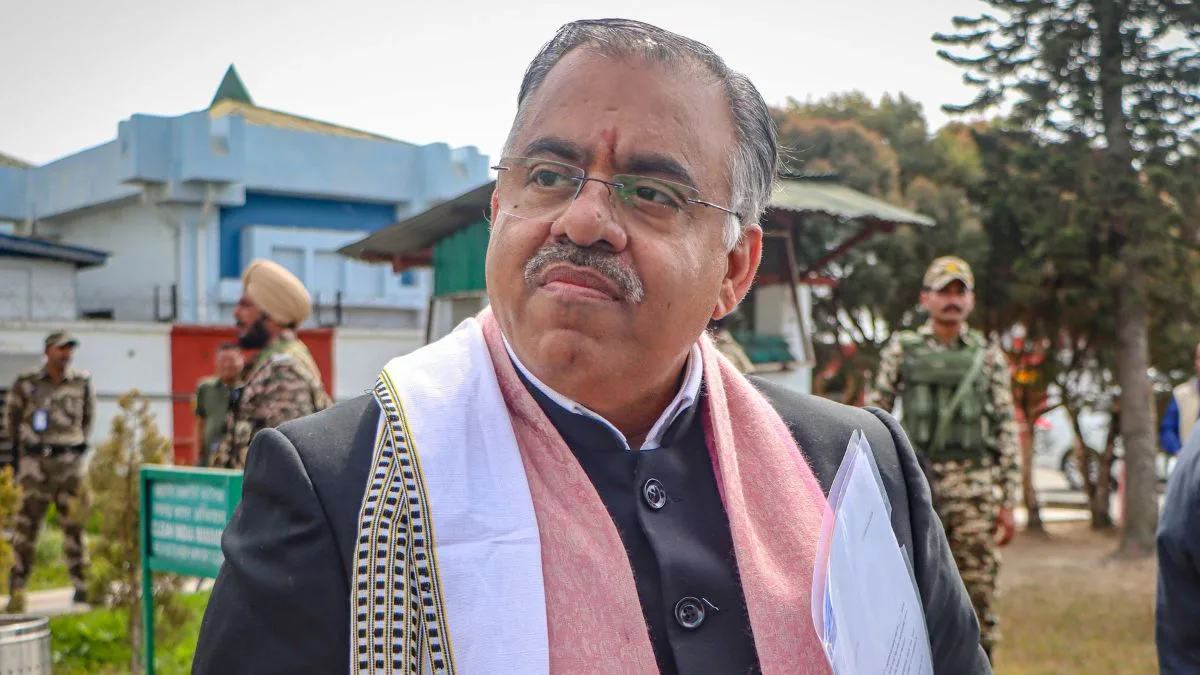
Addressing a gathering in Ranchi on Thursday, General Chauhan said that the Navy also played a big role in Operation Sindoor. Stating that the Indian Navy had the prowess and weapons to engage in long-range strikes during Op Sindoor, the CDS said that it had loiter munitions, S-400, and S-120. “Not many know, but the Marcos were also deployed in J&K and Punjab. The naval weaponry and personnel helped in engaging the targets identified by the Army,” he said.
Advertisement
It may be recalled that during the media briefing on Op Sindoor, Vice Admiral AN Pramod, Director General Naval Operations, had stated that the Indian Navy is fully prepared to strike both at sea and on land, including Karachi, at a time of India’s choosing.
The DGNO further added that the forward deployment of the Indian Navy compelled the Pakistani naval and air units to maintain a defensive posture, mostly inside harbours or very close to their coast, which they (the IN) monitored continuously.
The timing of the strikes was decided after several days of closely tracking the Pakistan Air Force’s movements in the aftermath of the Pahalgam attack. “From April 23 onwards, we observed Pakistan’s flying patterns. They anticipated that we might launch an airstrike,” the CDS explained. He added that detailed monitoring was carried out when PAF aircraft were airborne and when they returned to their bases. Ultimately, May 7 was selected as the operation date because the weather conditions were ideal with clear skies and no rain, ensuring unhindered imagery and execution.
The CDS stated that the first strike took place at 1 a.m. in May, noting that although the pitch-dark conditions made it extremely challenging to capture satellite images, photographs, and other evidence, the timing was deliberately chosen to minimise the risk of civilian casualties.
“First, we had confidence in our capabilities to obtain imagery even at night. The second important reason was that we wanted to avoid civilian casualties. The ideal time would have been 5:30–6:00 AM, but at that time, the first Azaan or the first prayer takes place, and in Bahawalpur and Muridke, there could be a lot of civilian movement, putting many lives at risk. To prevent that, we chose the time between 1:00 and 1:30,” he said.